How can healthcare facilities reduce cleaning costs?
Healthcare facilities cut cleaning costs safely through four levers: risk-based zoning (clean to the standard each area actually requires), chemical dilution control, reusable microfiber programs, and data-driven scheduling — not by cleaning less, but by cleaning precisely. In clinical environments, the cheapest mistake is the one that causes an infection; these practices save money without touching the hygiene baseline.
1. Risk-based zoning. Not every square meter needs operating-room protocol. Classify spaces into risk tiers — clinical/patient-contact areas, semi-clinical (corridors, waiting rooms), and administrative — and assign frequency and product intensity accordingly. Most facilities over-clean offices and under-schedule high-touch clinical points; zoning redistributes the same labor to where it prevents infections.
2. Dilution control systems. Concentrated chemicals with metered dispensers cost dramatically less per ready-to-use liter than pre-mixed sprays — and eliminate the “glug measurement” that wastes product and leaves residue. Consistency is also a compliance asset: every mix is label-accurate.
3. Microfiber programs. A laundered microfiber system (color-coded by zone, one cloth per room in clinical areas) outperforms disposables on both particle removal and cost-per-use, and supports cross-contamination protocols. The upfront investment returns within months.
4. High-touch frequency, low-touch scheduling. Door handles, rails, switches, and reception counters need multiple daily passes; floors and vertical surfaces don’t. Splitting “touch rounds” from “full cleans” raises hygiene outcomes while trimming total hours.
5. Train for sequence, audit with checklists. Cleaning clinical space in the correct order (clean-to-dirty, top-to-bottom) prevents re-work and cross-contamination. Written checklists per room type make quality auditable — and audits are what keep a cost program from silently degrading standards.
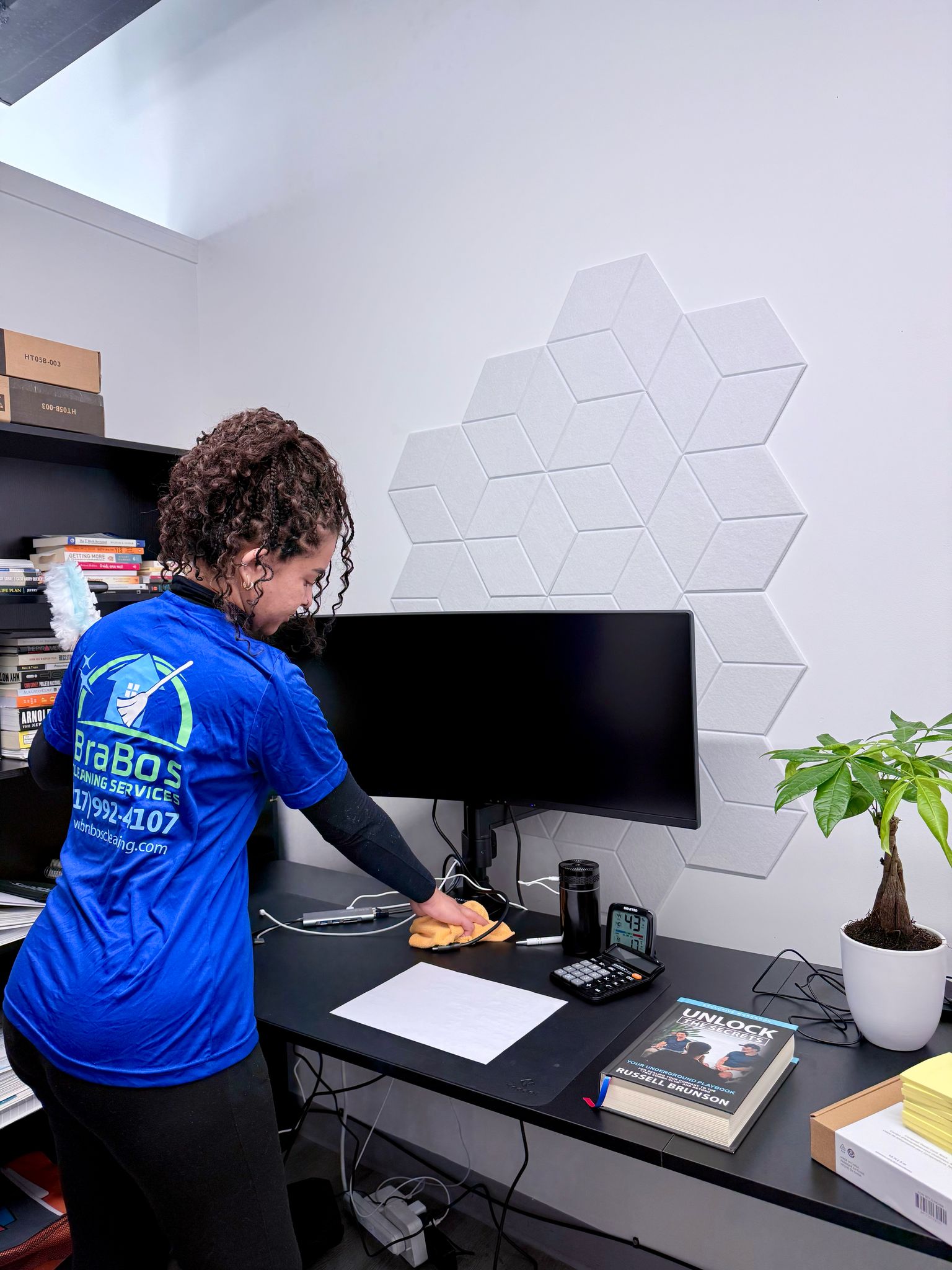
6. Right-size the outsourcing. Facilities often pay clinical rates for administrative-area cleaning. Splitting scopes — specialist clinical cleaning where required, commercial cleaning → for offices and common areas — matches cost to requirement. (Our commercial teams serve medical-adjacent spaces across Greater Boston: offices, waiting areas and common spaces, with the documentation trail facility managers need.)
The metric that matters
Track cost per cleaned square meter by zone, not total spend. Facilities that adopt zoning and dilution control typically reduce chemical spend by a third and reallocate 10–20% of labor hours to high-touch rounds — same budget, measurably better hygiene where it counts. For office and common-area scopes in the Boston area, talk to our commercial team →.